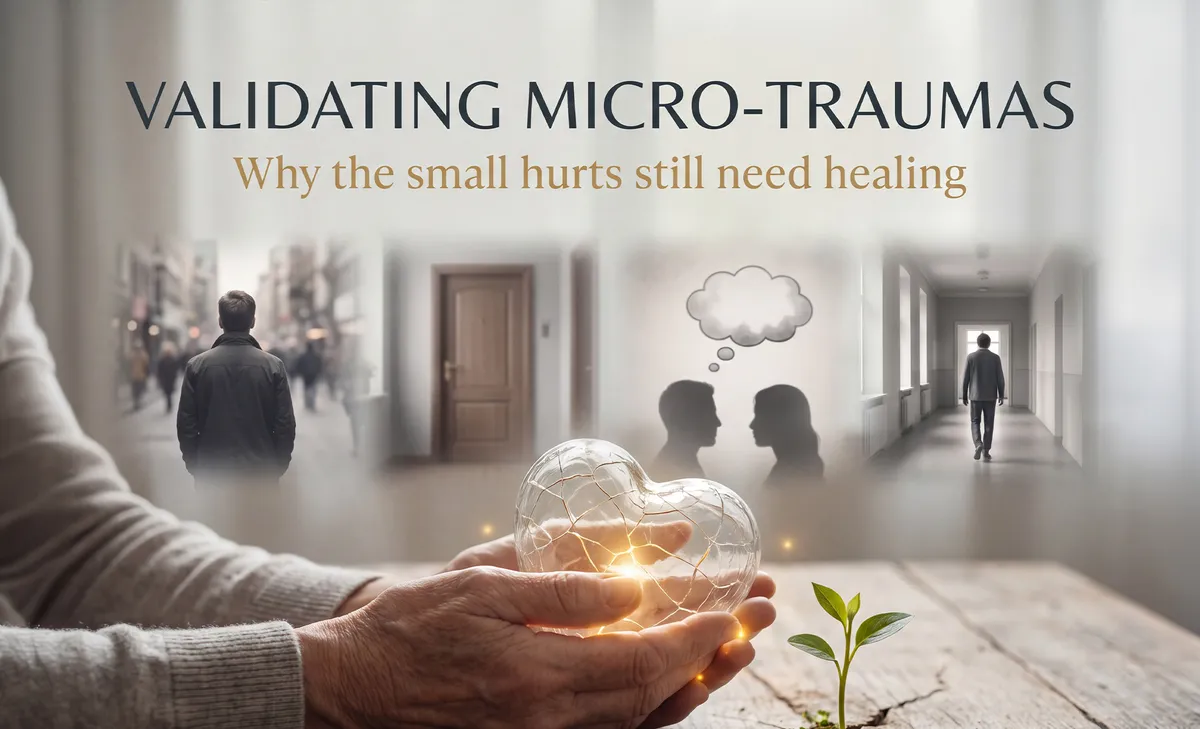
Validating Micro-Traumas: Why the Small Hurts Still Need Healing
Not all trauma comes from catastrophic events.
Some of the deepest emotional wounds are caused by what the world considers ‘minor’—a betrayal by a friend, being excluded, harsh words, sudden distance in a relationship, or repeated invalidation.
These are called micro-traumas, and while subtle, they accumulate and can shape our sense of safety, trust, and self-worth.
What Are Micro-Traumas?
Micro-traumas are small, repeated emotional injuries that may not be life-threatening but are deeply soul-wounding.
They include:
Gossip or slander
Betrayal by a close friend or confidant
Repeated dismissal of feelings
Being left out or overlooked
Passive-aggressive communication
Silent treatments or emotional distance
Being told you’re “too sensitive” for reacting to pain
Why Micro-Traumas Matter
These subtle wounds often go unrecognized because they don’t ‘look’ traumatic.
But the nervous system can’t always tell the difference between a big betrayal and a small one—it simply registers threat, abandonment, or pain.
Over time, micro-traumas can:
Erode self-esteem
Create anxiety in new relationships
Lead to emotional suppression or overreaction
Cause us to sabotage future connections out of fear or distrust
What Happens When Micro-Traumas Aren’t Validated?
When these wounds are dismissed—by others or ourselves—they fester.
We start questioning our right to feel hurt.
We downplay betrayal.
We tell ourselves to ‘move on’—but the pain doesn’t leave, it just buries itself deeper.
Eventually, we may:
Carry resentment into future relationships
Build emotional walls that block love and connection
Feel chronically misunderstood or emotionally alone
Healing From Micro-Traumas
Healing begins with validation—recognizing that your pain is real, even if the world doesn’t see it.
To begin healing:
Name the hurt. Say it out loud or write it down.
Let yourself feel the emotions instead of suppressing them.
Talk to a trusted friend, coach, or therapist.
Set boundaries with people who repeatedly cause small harms.
Acknowledge that your response is not weakness—it’s wisdom.
Final Thoughts
Micro-traumas may be invisible to others, but they are not insignificant.
They are the paper cuts on the soul—the tiny wounds that, if ignored, can cause deep emotional scarring.
But with awareness, compassion, and consistent healing, we can release their power, and make space for healthy, honest connection moving forward.
